You’re the Last to See How You Lead
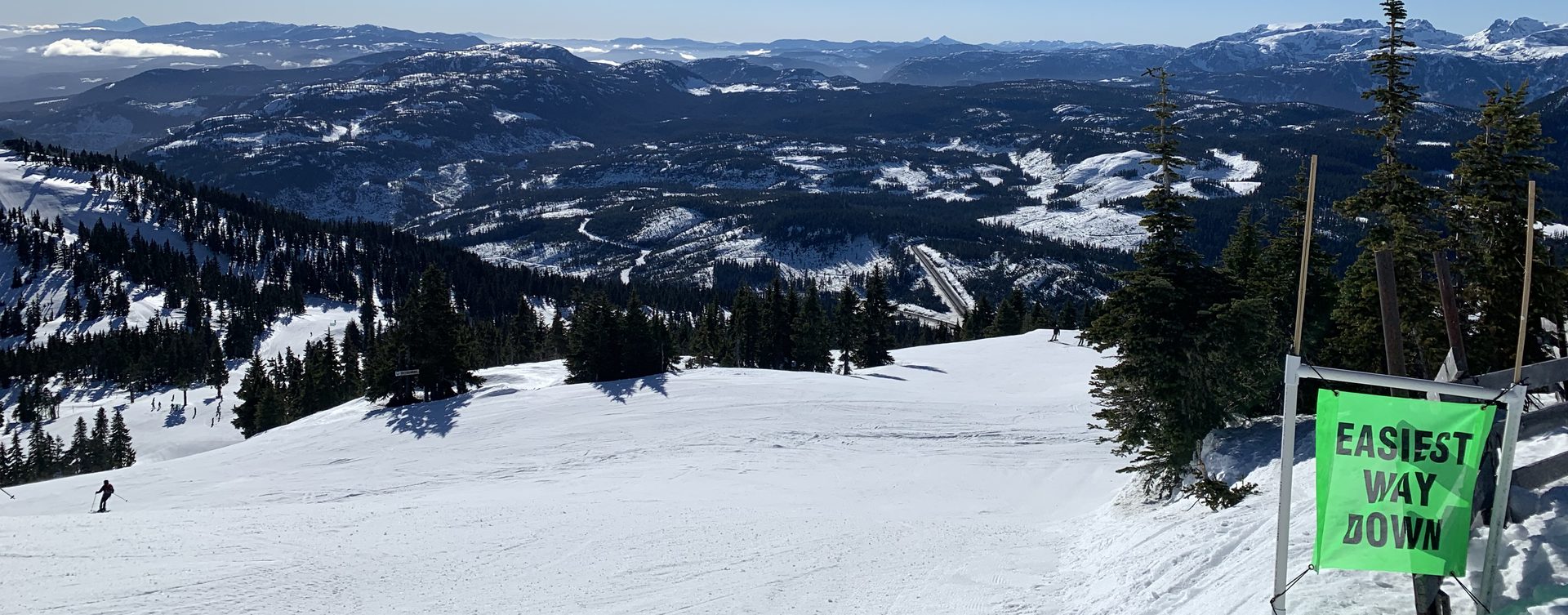
I was partway down a ski hill watching two skiers below me.
They were competent skiers, both getting down the hill. But one of them was smooth — easy, unhurried, the turns just happening effortlessly. The other was working harder for the same run. He entered his turns a little stiff. A little behind the rhythm. He had it handled, but you could see the effort.
As I watched I wondered ... which one do I look like? If someone was paying attention to me from the chairlift, was I making it look easy or like work? I was hoping I looked like the first guy but I honestly couldn’t tell. I could read both of them in a glance but I couldn’t see myself.
That’s the strange truth about leading. You can watch another leader and read their form in a glance. But you never get to watch your own.
How you lead is visible to everyone around you long before it’s visible to you. Do I look like I’ve got this? Am I moving with skill and flow, or does it look like I’m working hard to hold it together?
Your team could describe your leadership with a precision that’s a bit unsettling. They know which news you can take and which news makes you flinch. They know the moments when "my door is always open" is actually true. They’ve watched how you treat the person with the least power in the room, and they’ve drawn their conclusions. They felt the last team meeting in their stomachs while you were still feeling good about the slide deck.
They can feel more than your personal manner, too — they feel the weather of the place. It’s also the reading leaders often get wrong. Carleton University recently ran a survey of around 1,300 Canadian charities. Its Charity Insights Canada Project reported that optimism across the sector is at a three-year high — 77 per cent of organizations feel optimistic about the year ahead. But underneath that optimism, the same survey finds the workforce quietly straining: a third of organizations name staff and volunteer burnout. One worker wryly spoke up about the cost of being called ’resilient’, saying plainly: "willing to work for free… not so great for the people doing the unpaid work."
Optimism is a head-office feeling. Burnout is a front-line one. If you’re a leader only feeling the first, that distance is an important gap.
None of it is hidden. It’s just hidden from you.
Here’s where most leaders go wrong. You assume that if you care enough, reflect enough, mean well enough, the gap between how your team sees you and how you see yourself will close on its own. It doesn’t. You can’t think your way through to seeing how you’re actually landing, because you can’t watch yourself lead. Wanting to look like the effortless leader tells you nothing about whether you come across that way. I know what I wanted to look like halfway down that hill — and I still couldn’t see myself.
This gap is expensive, and it’s the people around you who pay it. You can spend years tending a version of yourself that might not exist — the patient one, the approachable one, the one who gives people room. It may live only inside your own head. Your team never met that person. They work for whoever actually shows up.
The ones who see the difference rarely say so; they’re far too smart to hand you that feedback to your face. They just get quieter. And then they go. You usually learn which version of you they’d been working for when the resignation is already on your desk.
You can’t close that gap by trying harder — more reflection is still you, looking at you. It closes only when you can see how your leadership actually lands from the one spot you can’t reach on your own: somewhere above you on the hill, watching your moves. Plainly spoken by someone who doesn’t have to risk anything to tell you what they are seeing.
Let me be straight: Every leader, me included, has serious gaps in their leadership. The talent of a skillful leader is that they take the time to find out — they have someone record them and then they watch the video, they check in with others, they get feedback from people who don’t rely on them for their job. The Leadership Check-In gives you that view from above — a short, free read on the distance between how you think your leadership lands and how it actually does. No personality type. No verdict on your character. The one look you can’t get from inside your own boots.
I still don’t know what kind of skier I look like. I only get out occasionally and I am focused much more on a good time than how I look to others ... but I definitely care what kind of leader I am. I pay attention there. I want to be a leader that my team will remember well years later. If you are a leader with a team that watches you every day, and you want to be the best you can for them, know that you don’t have to enter blind.
You can get a real view on how you are landing.
En route, but aren’t we all.